About this item
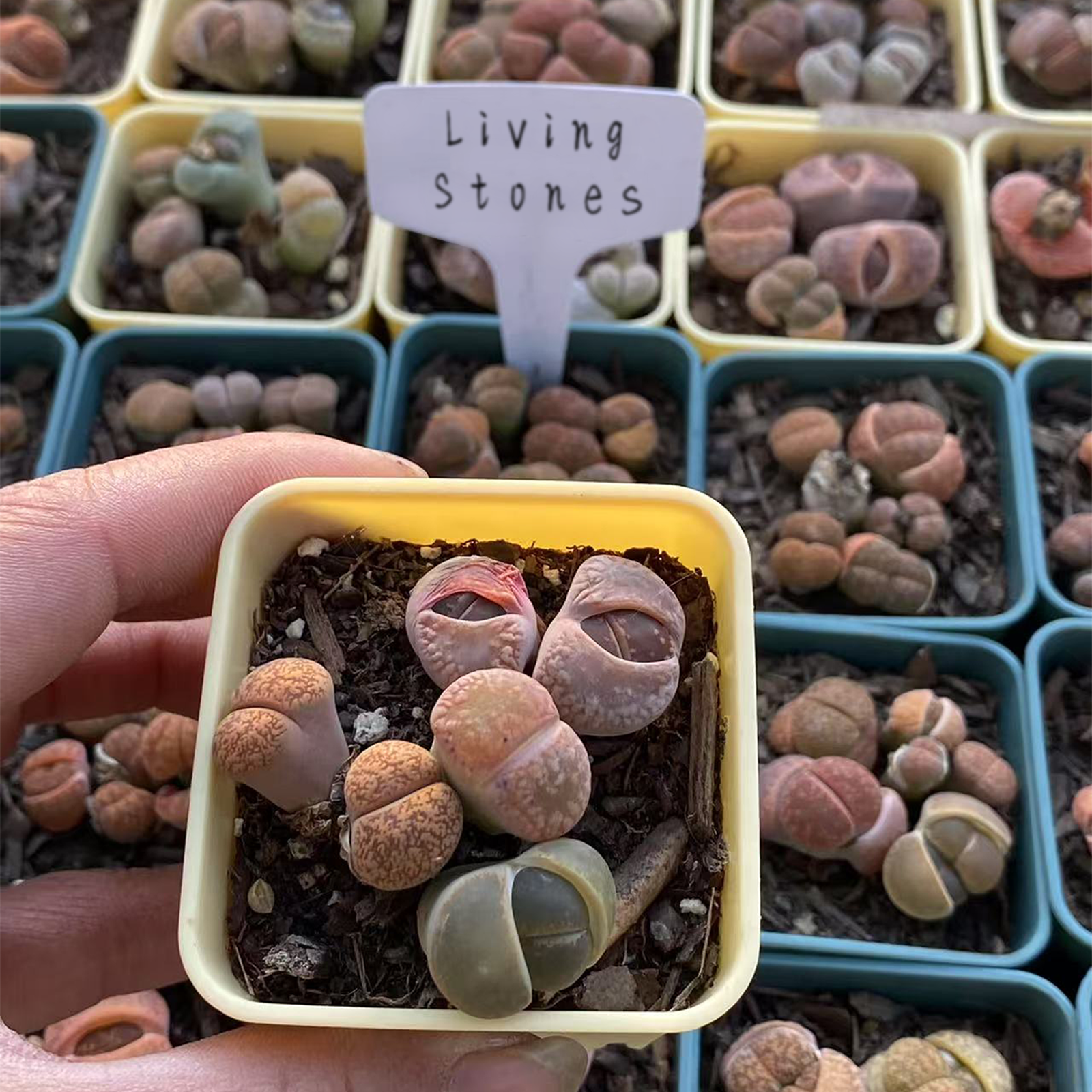
Succulents are sold in 2-inch pots, fully rooted in succulent-specific soil with the pot and soil included. Plant sizes may vary as different species grow in various ways. For example, some may grow wider, shorter, taller, or with trailing stems.
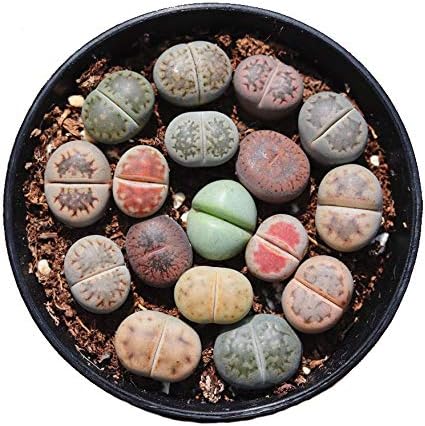
Lithops, also known as living stones, is a very unique succulent plant belonging to the Aizoaceae family and the Lithops genus. Here are its main characteristics:
Leaves: The leaves of Lithops are thick and oval-shaped, usually consisting of only two opposite leaves. The top has a transparent or semi-transparent “window” that allows light to pass through.
Color: The leaves come in various colors, including white, light gray, brown, blue-gray, green, yellow, red, and purplish red. The top is egg-shaped, either flat or slightly convex.
Flowers: The flowers of Lithops are typically yellow or white and are large enough to almost cover the entire plant.
Growth Habit: The plant is small and compact with beautiful markings that resemble pebbles.
Growth Conditions
Light Requirements: Lithops prefers a sunny environment but should not be exposed to prolonged direct sunlight.
Temperature: The ideal growth temperature is between 10-30°C, and it should not drop below 12°C in winter.
Watering: Lithops is drought-tolerant and should be watered using the "dry thoroughly, water thoroughly" principle, avoiding waterlogging.
Soil: It prefers loose, breathable, and well-draining soil, such as a mix of leaf mold, limestone materials, and river sand.
Care Tips
Light: Lithops can tolerate full sunlight during spring and autumn, but during high temperatures in summer, it should be given some shade.
Watering: Stick to the "dry thoroughly, water thoroughly" principle and avoid waterlogging.
Fertilizing: During the growing season, use a specialized succulent fertilizer or balanced NPK fertilizer once a month. Be careful not to over-fertilize.
Propagation
Seeding: Seeds mature in late autumn and should be sown immediately or in the spring. Typically, no soil should cover the seeds, and the seed pot should be covered with glass.
Division: Lithops can also be propagated by division. Mature plants can be dug out of the pot and separated into smaller plants, which are then replanted.
Important Notes
Avoid Waterlogging: Lithops is sensitive to waterlogging, so make sure the soil has good drainage when watering.
Temperature Management: In winter, ensure the plant is kept warm to prevent freezing and damage to the leaves.